


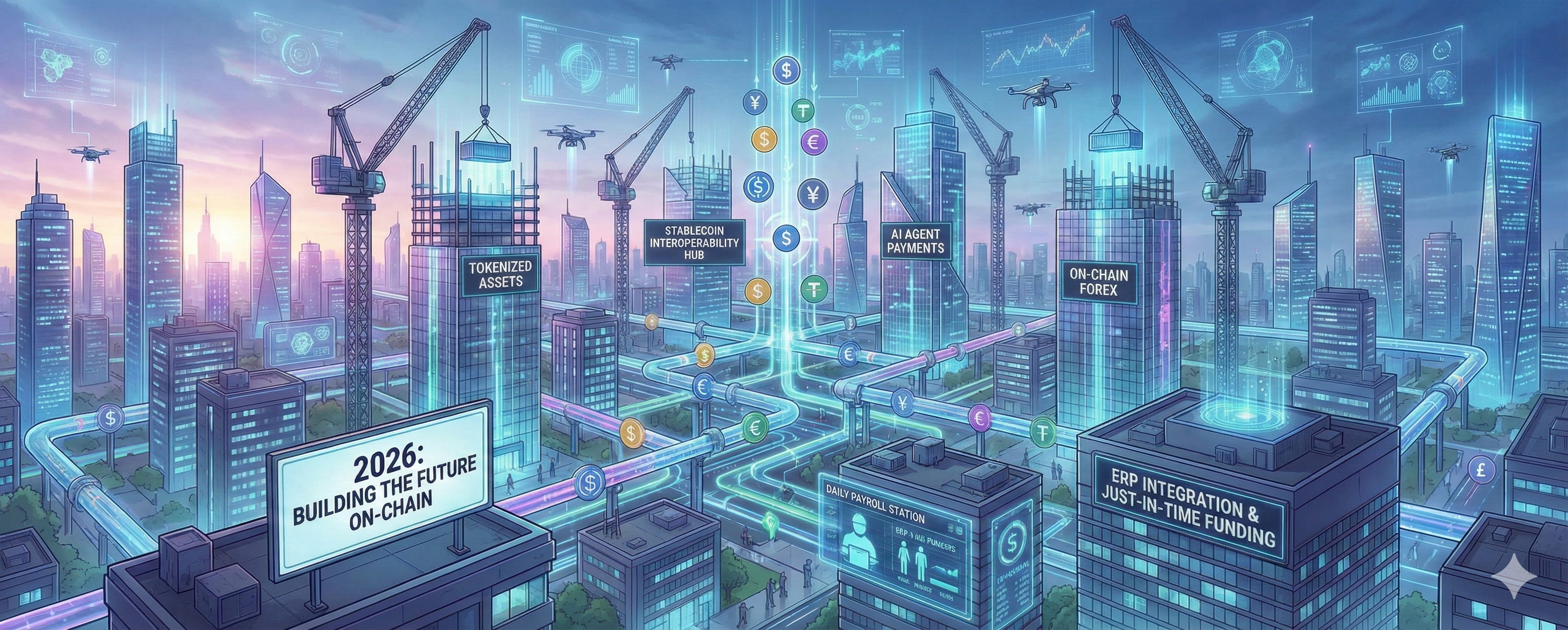
More than anything else, 2026 is a year to be building. The immense progress that came in the regulatory space in 2025 has brought us to the start of a future built on tokenized assets, stablecoins, and smart contracts. Like the rules themselves, a lot of the infrastructure that needs to scale up this ecosystem is not yet fully built out. The race will be on to build all the missing pieces in 2026.
What missing pieces, you might be wondering? Not the big ones. We have crypto exchanges and stablecoins and tokenized assets, but we’re still missing smaller pieces. Like how to make all the different stablecoins interoperable? There are already dozens of different US dollar stablecoins, many high quality and backed by treasuries. It will be useful to have them instantly exchangeable and interoperable.
If you know the world of traditional finance, you know there are literally thousands of applications that keep the “plumbing” functioning and serve all kinds of useful purposes. While some intermediaries will disappear, many of these will find new equivalents on-chain, but this time running in near-real time, enabling complex logic and massive scale.
Foreign exchange is good example of a current gap. As users prioritize cross border payments, many are going to want translation into local currencies. Traditional on-chain automated market makers (AMMs) are not a good fit for foreign exchange right now; since exchange prices are largely set in off-chain markets. Multiple start-ups and companies are trying to figure out what will work instead. Whatever happens, though, conversions into foreign currencies will need to be fast, efficient, and closely connected to market prices.
Not all this work is going to be focused on replicating features in the world of traditional finance on-chain. Some of the building work in 2026 will be all about new things. The emerging 402pay concept, enabling small payments and integration to AI agents, is a good example of “net new” development. I believe we will also see early versions of commercialized agentic systems that are spending money autonomously under constraints imposed by smart contracts. Neither of these will be ready for mass adoption, but developers and early adopters will be busy.
The second big priority I expect to see in 2026 is onboarding new consumers and enterprises into the crypto ecosystem. For consumers, I increasingly believe that the killer application in driving adoption will be payroll. With their extremely low payment costs, on-chain providers will start offering features like per-day or per-output payments. Since many ride-share and gig-workers of all kinds tend to be at the lower end of the income spectrum, the opportunity to get paid daily will be a powerful incentive to switch into a stablecoin-based banking system.
Enterprises will start coming on board with a similarly strategic approach. In an EY survey we put out earlier this year, enterprises said lack of Enterprise Resource Planning (ERP) integration was their top obstacle to faster stablecoin adoption. As that gets built out, enterprises will adopt stablecoin payments to drive down costs and they will switch away from keeping local pools of money in many places to buffer payables and receivables uncertainty towards something closer to a just-in-time funding model.
For both consumers and enterprises, I think of this as the beginning of a streaming model for money where we replace sizable infrequent money transfers with lots of small ones, just the way we replaced downloading whole songs with streaming music as we listen to it. As the cost and time required to execute transactions heads towards zero (without ever actually getting there), the whole model of how companies and individuals manage their money will emerge.
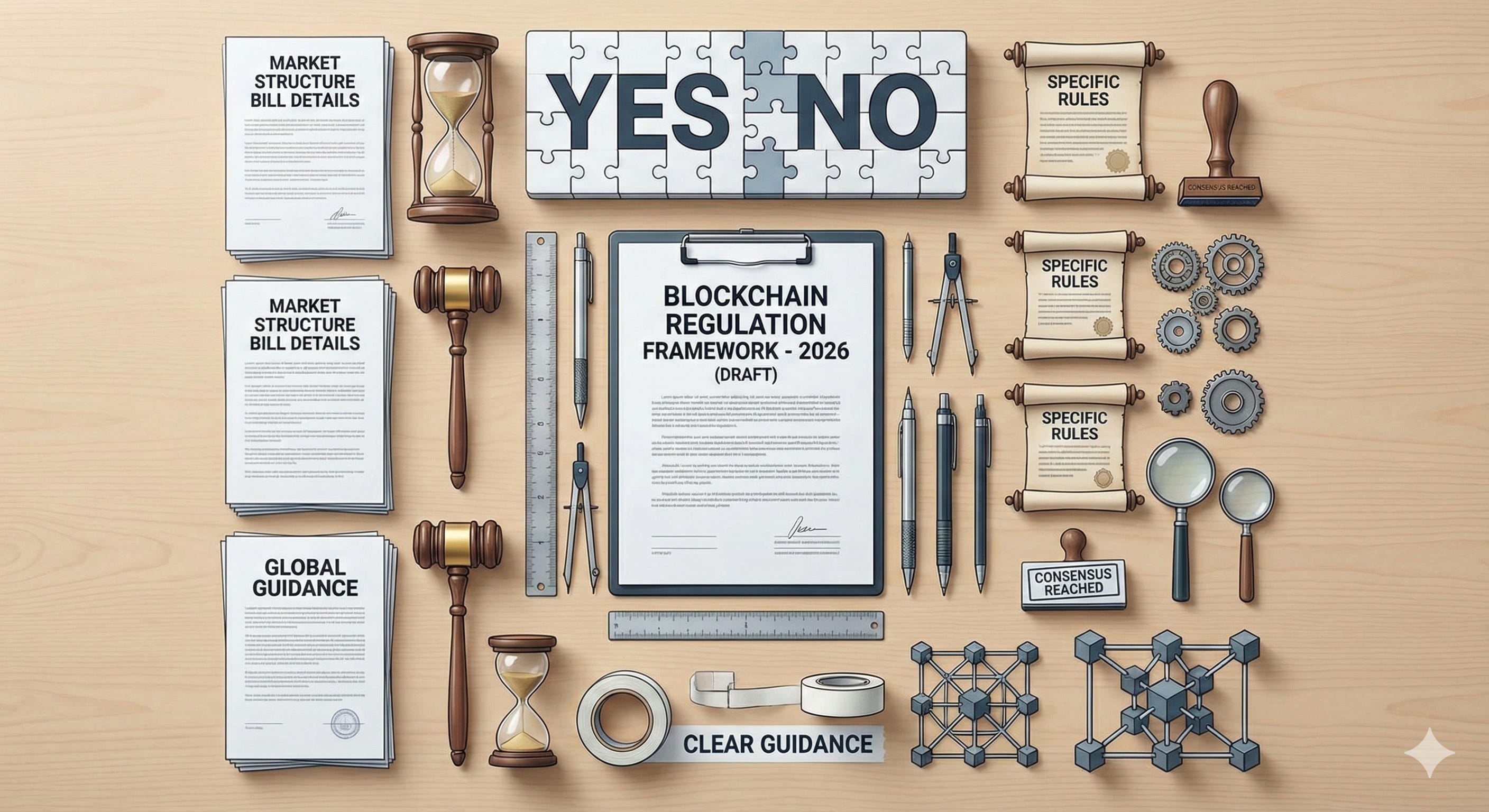
My third prediction for 2026 is that the pace of regulatory improvement will slow considerably. There is still a lot of work to be done, and some big bills pending including the market structure bill. The good news is that we’re now past the big questions of “yes or no” and into the details of how. And those just take longer to work through. In the US and globally, there is a general consensus that blockchain technology is both useful and here to stay but needs clear guidance and specific rules.
The bad news that will slow progress and poses a risk to legislation is the use of cryptocurrencies and stablecoins in corrupt business deals and public bribery. This industry has always been good at taking the spotlight away from useful applications and putting it on bad behavior. Unfortunately, that’s still true. While I think there’s no chance that the clock will ever be rolled back to before the GENIUS bill, forward progress could slow down.
Coming in fourth is the rapid rise of on-chain privacy. This is tied to both enterprise and regulatory progress that has already been made. Business users are sensitive to leaking information about their operations. On-chain privacy systems will allow companies to build long-term supplier relationships and manage complex asset portfolios without competitors being able to see transaction-by-transaction details. I expect B2B users to be the earliest adopters but as costs come down, privacy may start to become a consumer default as well.
Coming last on my list, but perhaps first in the hands of politicians and central bankers is the increasing geopolitical impact of stablecoins. Since World War 2, the US dollar has been the foundation of the global financial system. Prior to the rise of stablecoins, there were indications that the era of dollar dominance might be waning. Big budget deficits and political instability in the US made the dollar less attractive (it’s down significantly this year). At the same time large efforts by other countries to build a non-US-based payment system for trade and financial services were slowly gaining some traction.
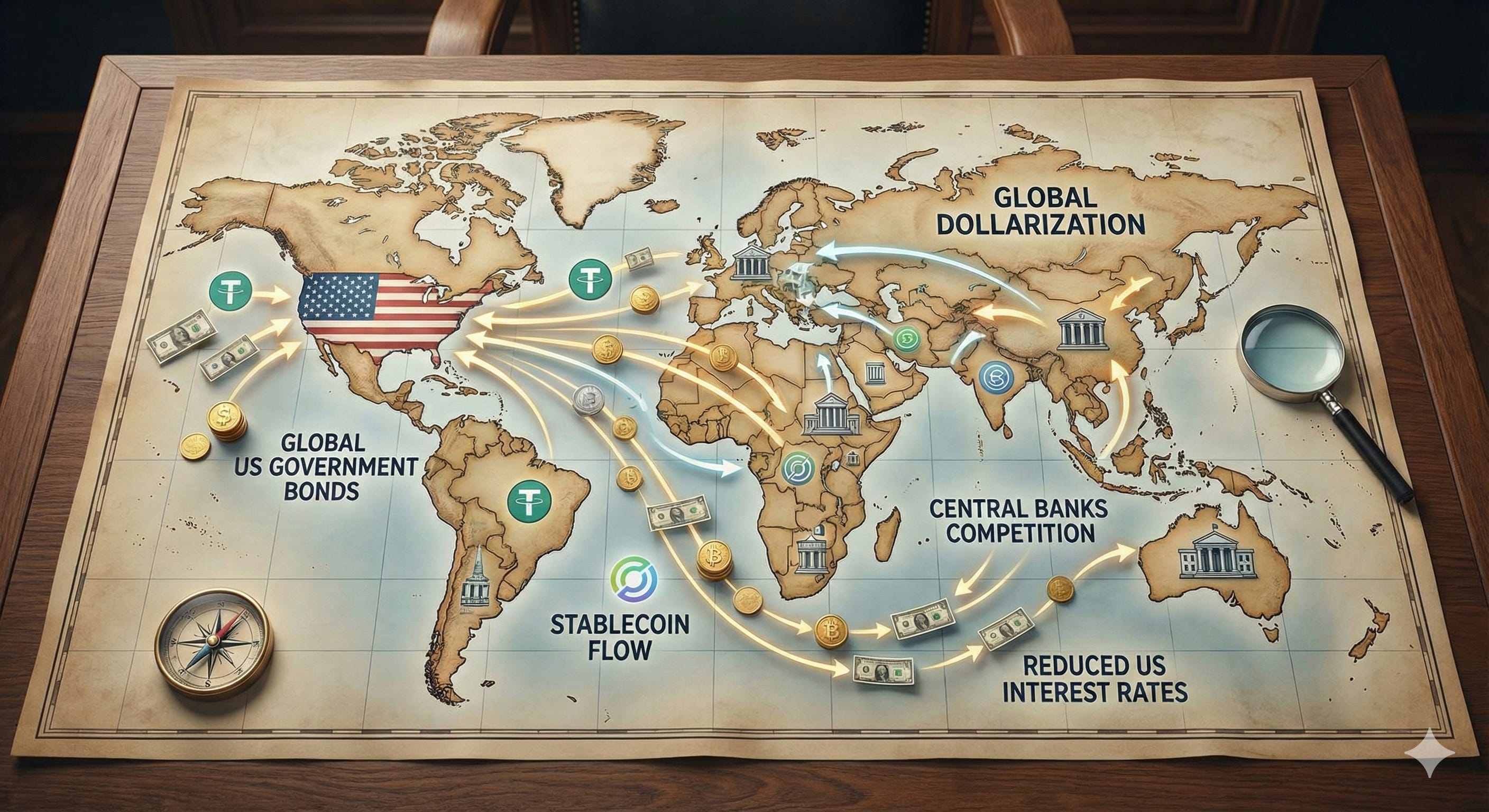
The rise of stablecoins, which are overwhelmingly (99%) denominated in US dollars, seems to have reversed that slow shift of momentum. Instead, we’re seeing accelerated global dollarization, especially in those emerging markets where consumers have little confidence in their local currencies. Until recently, in many countries, unless you were willing to hold a lot of physical cash (risky!), electronic banking and payments were under the sole control of local governments. That meant local currencies, whether they were well managed or not.
Stablecoins and self-custody have entirely changed that dynamic. Now, consumers and small businesses are free to choose their preferred currency. This is often not a legal choice, but practically speaking, many governments lack the tools and resources to enforce currency rules on thousands or millions of small businesses and individual consumers. The result: people are choosing dollars. And in most cases, these people are not doing some kind of sophisticated foreign exchange risk analysis. They don’t follow drama about Federal Reserve independence. They just want something widely accepted and comparatively stable and so they choose dollars. For them, the dollar isn’t just a currency, it’s a trusted brand.
The geopolitics of this shift are not trivial. Companies like Tether are now among the largest holders of US government bonds - more than many of the world’s biggest central banks. This means stablecoins are not just an interesting phenomenon, they have geopolitical impact on exchange rates and interest rates. The flow of money into US dollars is so large, economists believe it is likely to start reducing US interest rates over time and may reshape the way financial risk is spread around the world.
The bright side of this trend is that countries with poorly managed currencies may have far fewer options for financial repression. And the result might actually be a global shift towards better financial discipline and less inflation. For the first time in history, central banks around the world may be facing meaningful competition.
And now the wildcard: we, the crypto ecosystem, are not in the economic driver’s seat. Right now, more than anything else, it’s AI driving the system forward through investment. Benchmarks suggest that AI-driven spending is a bigger share of GDP than the telecom-heavy dot-com bubble in the late 1990s, though much less than the railway boom of the 1860s.
So while blockchain technology is being used to build a new global financial infrastructure, the overall macro environment is going to be much more sensitive to changes in the AI business. And so, for better or worse, it’s an AI world right now and blockchain is just living in it.
Whatever happens with the AI boom (or bust), one thing that won’t stop is technology adoption. From the Great Depression to the dotcom bust, from radios to eCommerce, the ups and downs of the economy have, at most, caused modest pauses in technology adoption, but never a meaningful break. The adoption of crypto, stablecoins, and tokenized assets (and AI as well) will continue regardless.
The views reflected in this article are the views of the author and do not necessarily reflect the views of the global EY organization or its member firms.